Dualit
Reframing e-commerce for trust, conversion, and scalable growth.

challenges
This wasn’t a usability problem.
It was a problem of trust, decision friction, and conversion at scale.
Dualit is a heritage brand with strong offline recognition - but that trust wasn’t translating online.
Users were:
struggling to navigate a fragmented product structure
overwhelmed by too much choice and unclear differentiation
dropping off at key decision points (especially on mobile)
failing to complete registrations and purchases
At the same time, the platform wasn’t built to evolve:
rigid content and limited flexibility
inconsistent experiences across mobile and desktop
difficult to scale across product lines and markets
solutions
Besides “modernise the UI”, I reframed it to:
How do we reduce decision friction and build trust across the buying journey, while creating a system that can scale?
I led the design direction end-to-end:
reframed the e-commerce problem with stakeholders
aligned design decisions with business goals (conversion, clarity, scalability)
drove UX across navigation, discovery, PDP, and registration journeys
balanced user needs with commercial priorities
The project ultimately was about shaping how the product works as a system.
Key Tensions
One of the core challenges was balancing:
Business goal: maximise product visibility
User need: reduce complexity and make decisions easier
More products visible = more exposure
But also = more confusion → lower conversion
Instead of asking “how many products should we show?”
We needed to understand:
“Where are users dropping off and why?”
This reframed the work around conversion, not exposure.
Solutions & Product Decisions
1. Simplifying the Decision Architecture
I explored two directions:
Preserve full catalogue visibility
Guide users through a structured journey
I chose guided decision-making:
simplified navigation and category structures
clearer product grouping and hierarchy
improved filtering and product cards for easier comparison
This meant reducing overall product exposure in favour of helping users make quicker, more confident decisions.
2. Designing for Progressive Trust
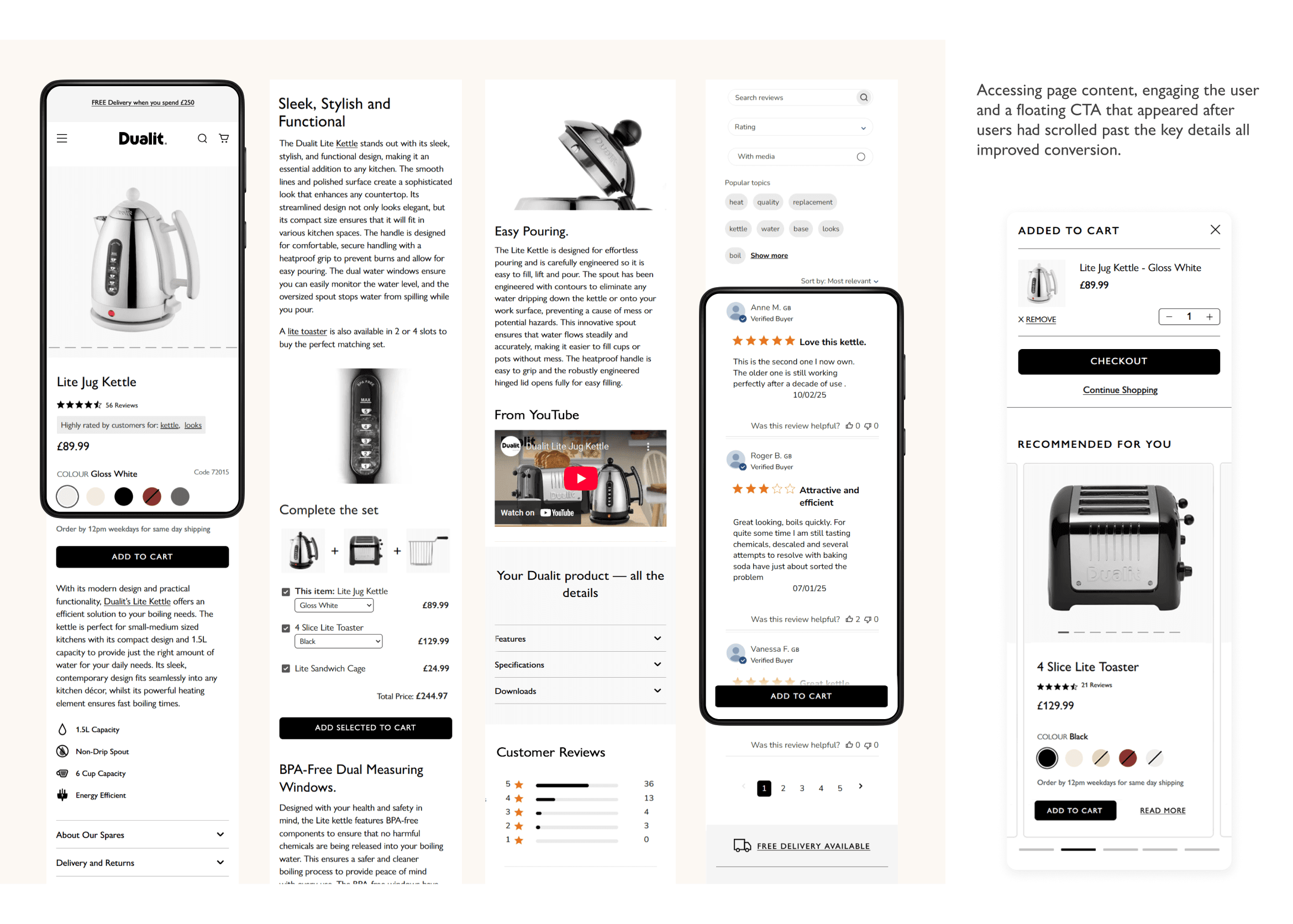
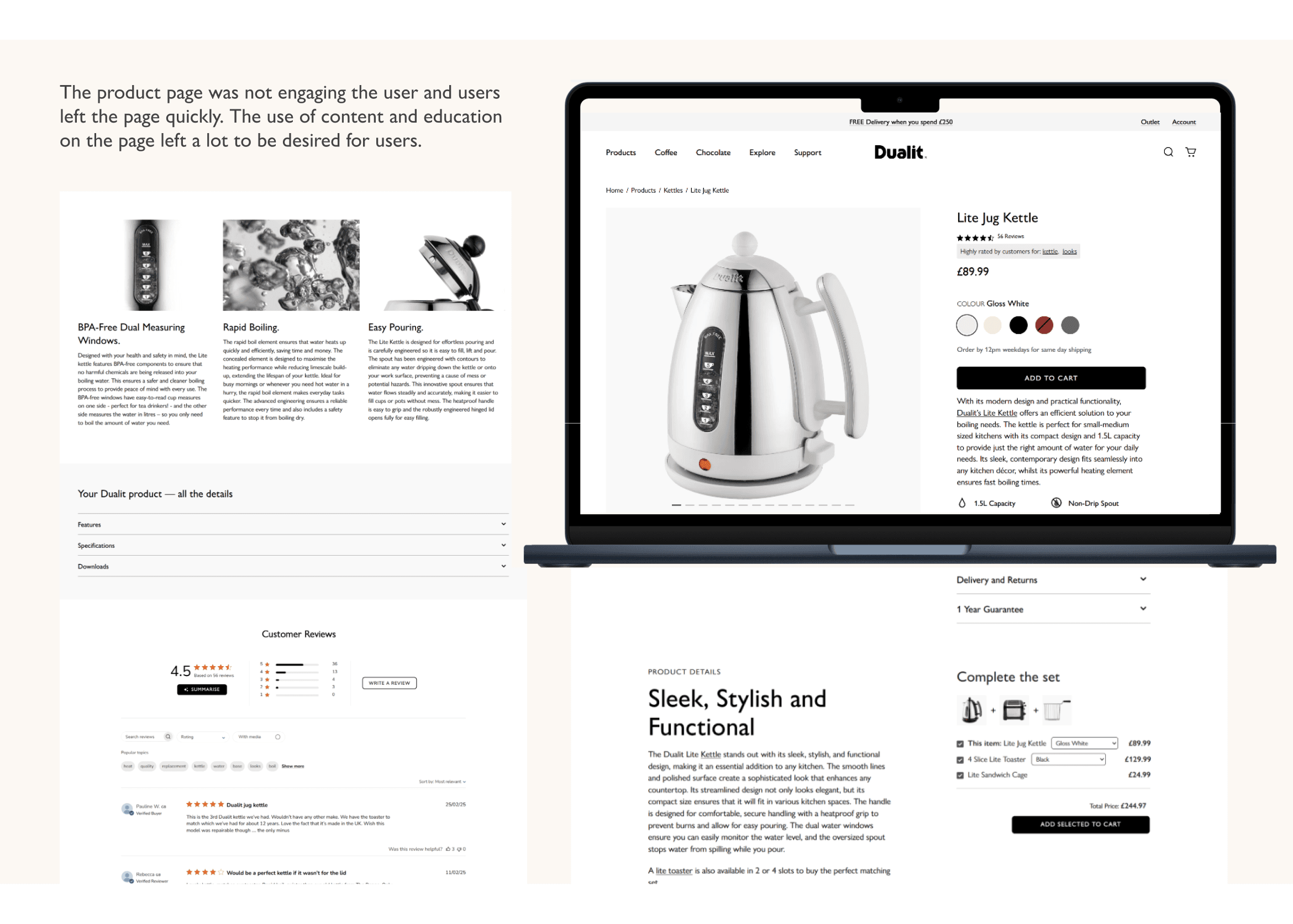
Product pages were redesigned as trust-building systems, not static layouts:
clearer information hierarchy and scannability
stronger product storytelling (craftsmanship, differentiation)
improved imagery and content structure
more confident CTAs and clearer next steps
The goal wasn’t just usability, but helping users feel confident enough to buy.
3. Fixing High-Friction Journeys
Focused improvements on key drop-off points:
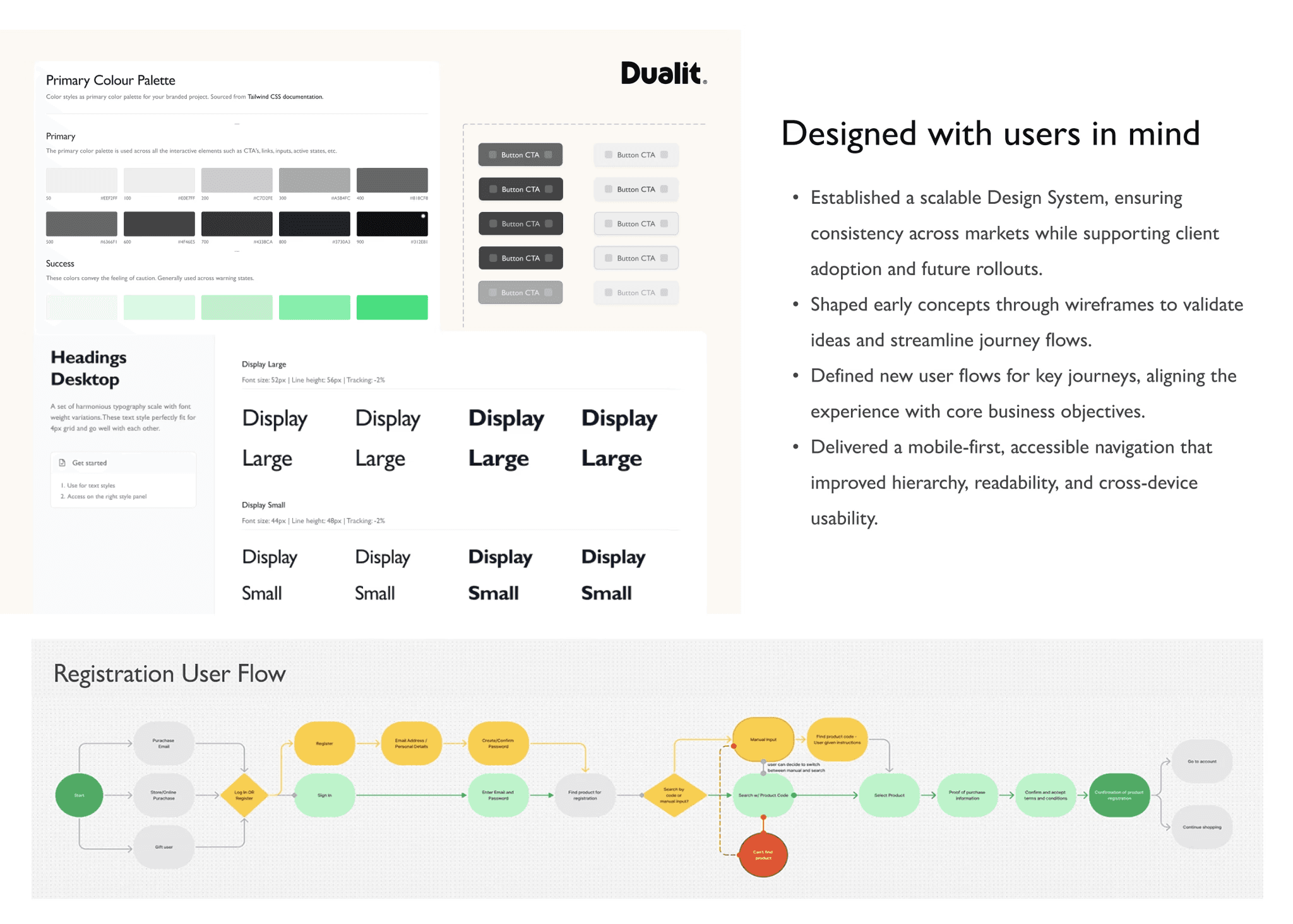
redesigned product registration into a clear, step-by-step flow
streamlined navigation across mobile and desktop
improved consistency across key journeys (PDP, account, discovery)
Reduced friction in the moments that mattered most.
4. From Pages to a Scalable System
Rather than redesigning isolated pages, I defined a modular system:
reusable components and content blocks
consistent interaction patterns
mobile-first, accessible foundations
This enabled:
faster iteration
easier expansion across product lines
support for international rollout
Working Within Constraints
We were working within:
a legacy platform with limited flexibility
strong brand expectations tied to heritage
pressure to maintain product visibility
tight delivery timelines
Instead of a full rebuild, I:
designed modular solutions compatible with existing tech
prioritised high-impact changes over ideal solutions
delivered improvements incrementally
The goal was to maximise impact without blocking delivery.
year
2025
timeframe
16 days
tools
Framer
category
UI/UX, Design Systems, Strategy, Process Implementation
01
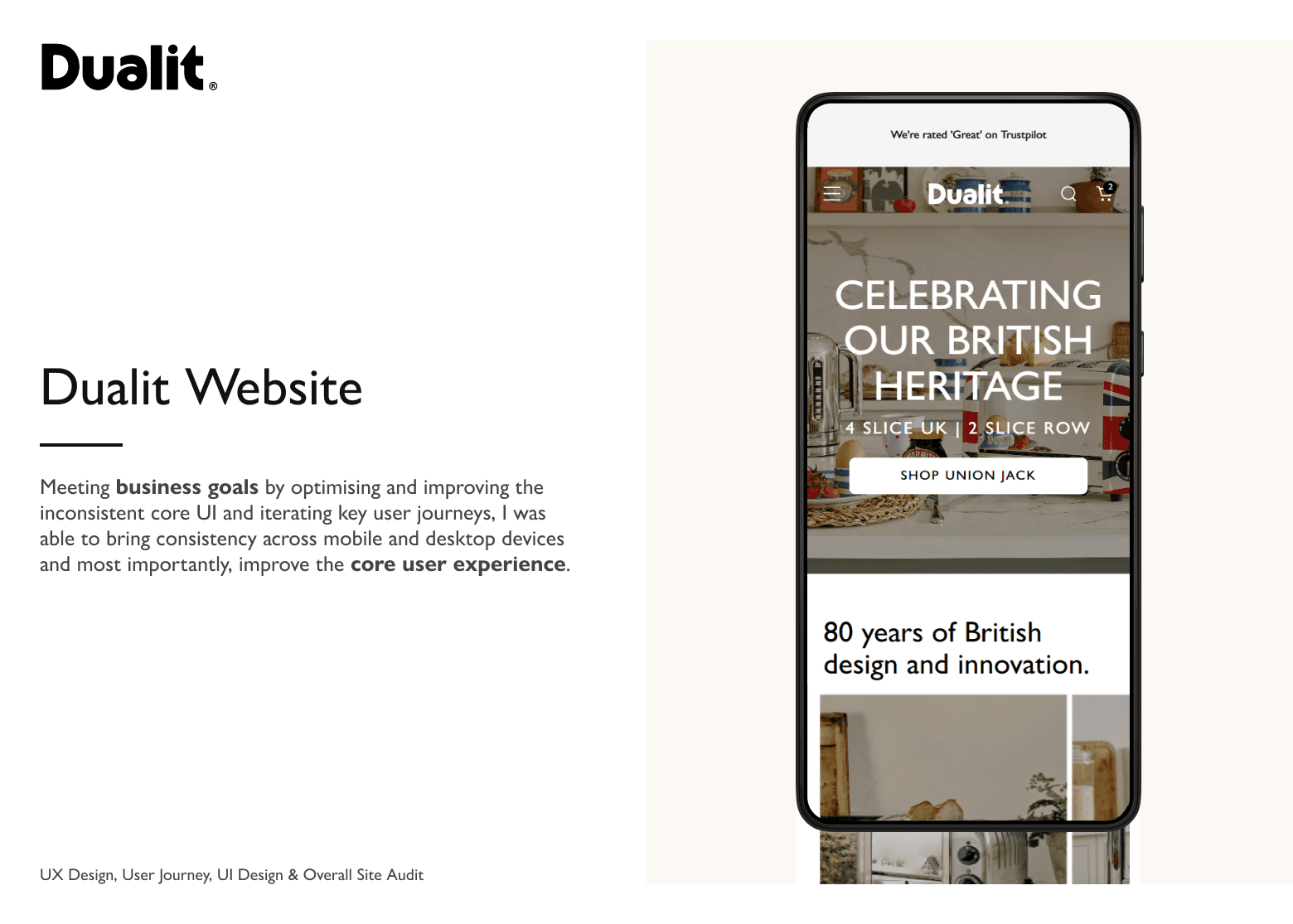
This project focused on redesigning Dualit’s e-commerce site to better reflect their heritage brand while improving usability, consistency, and support for direct-to-consumer growth.
02
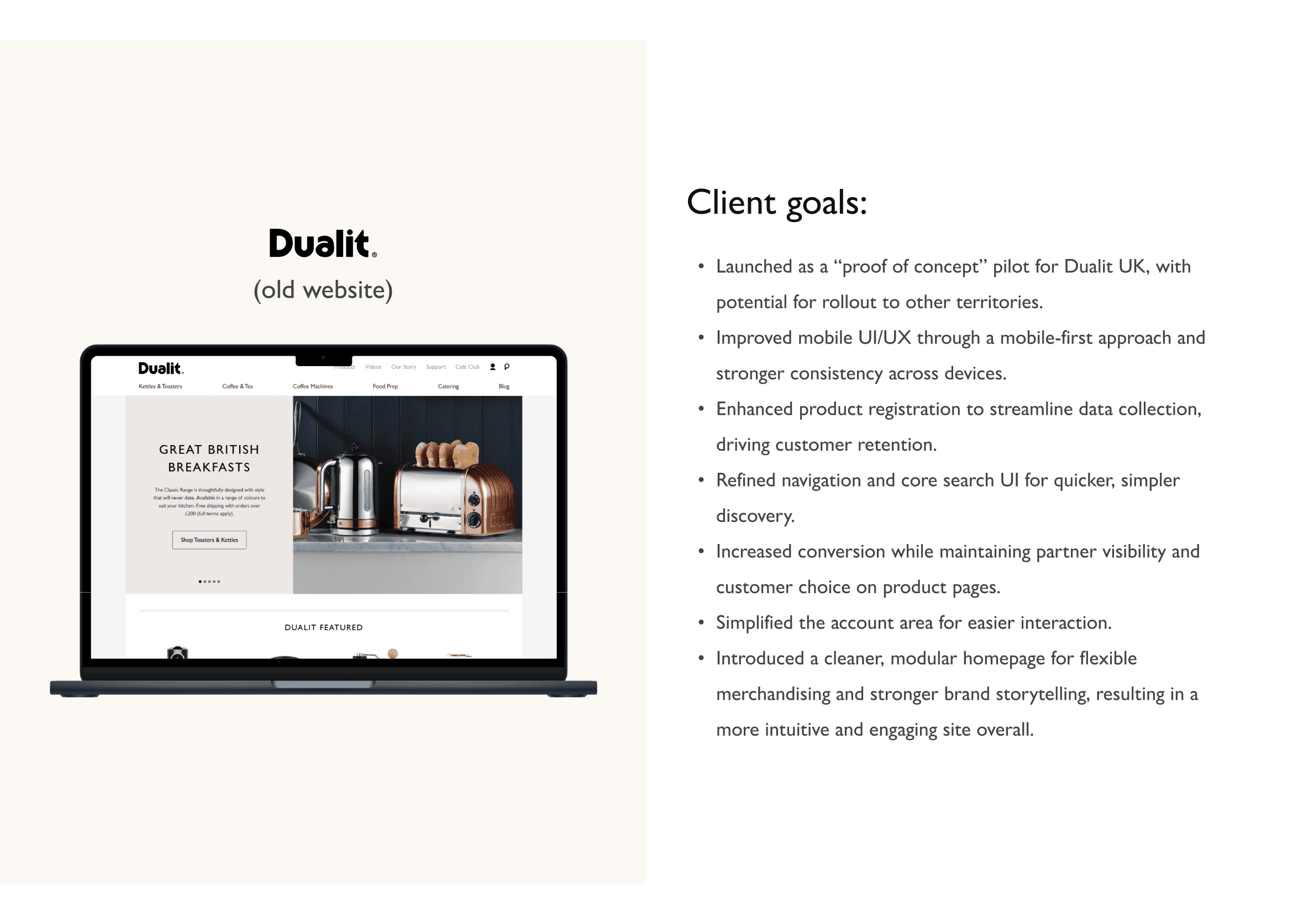
Principally, to unify the digital experience across mobile and desktop by improving navigation, product registration, and overall usability, in-line with business goals.
03
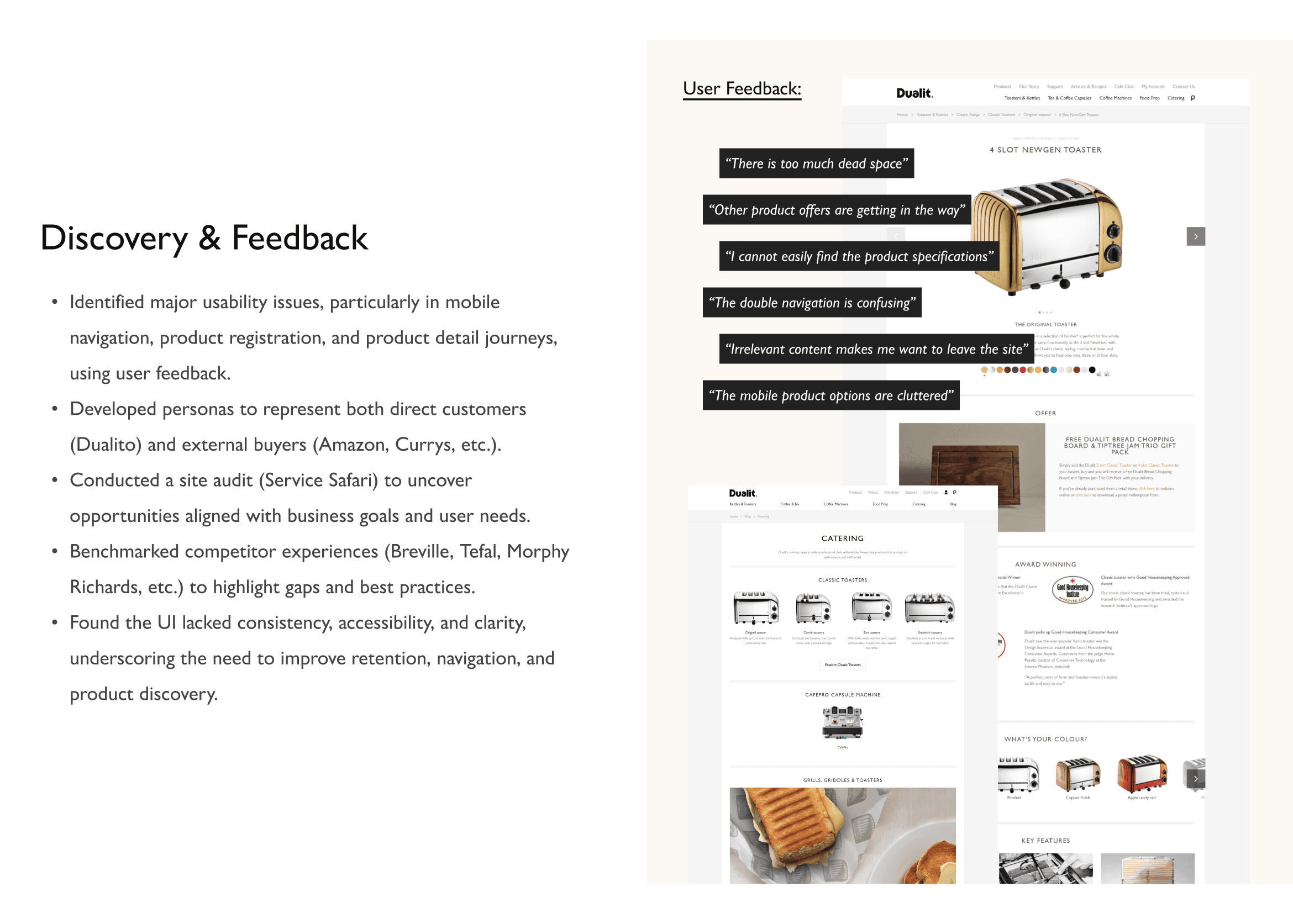
Worked closely with the client team to review existing feedback - highlighting confusion in the navigation and key journeys.
04
Designed a high-fidelity UI using an updated brand system, with an emphasis on accessibility, clarity, and mobile-first principles.
05
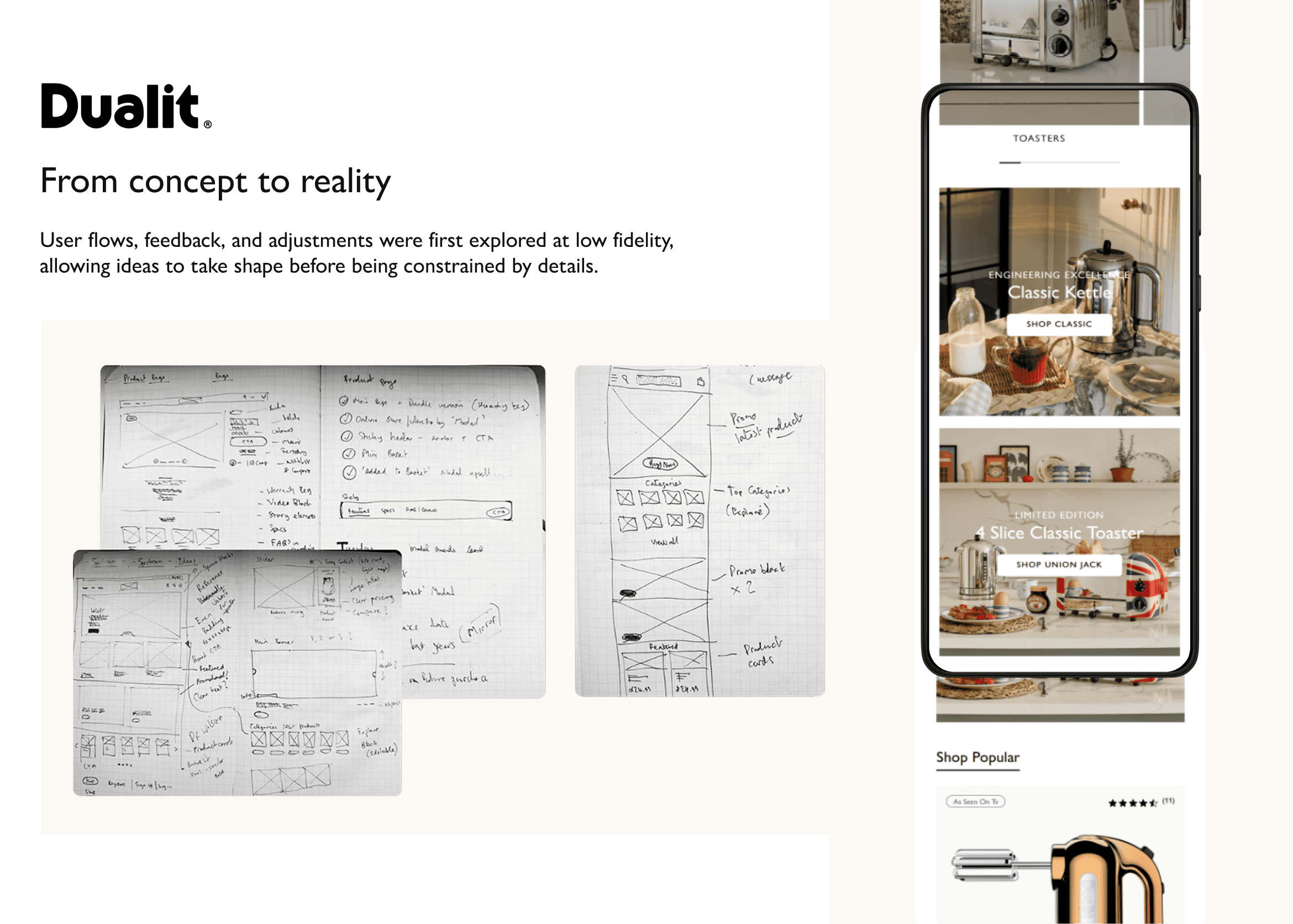
Conducted low-fidelity wireframing to test layout ideas and streamline core interactions.
06
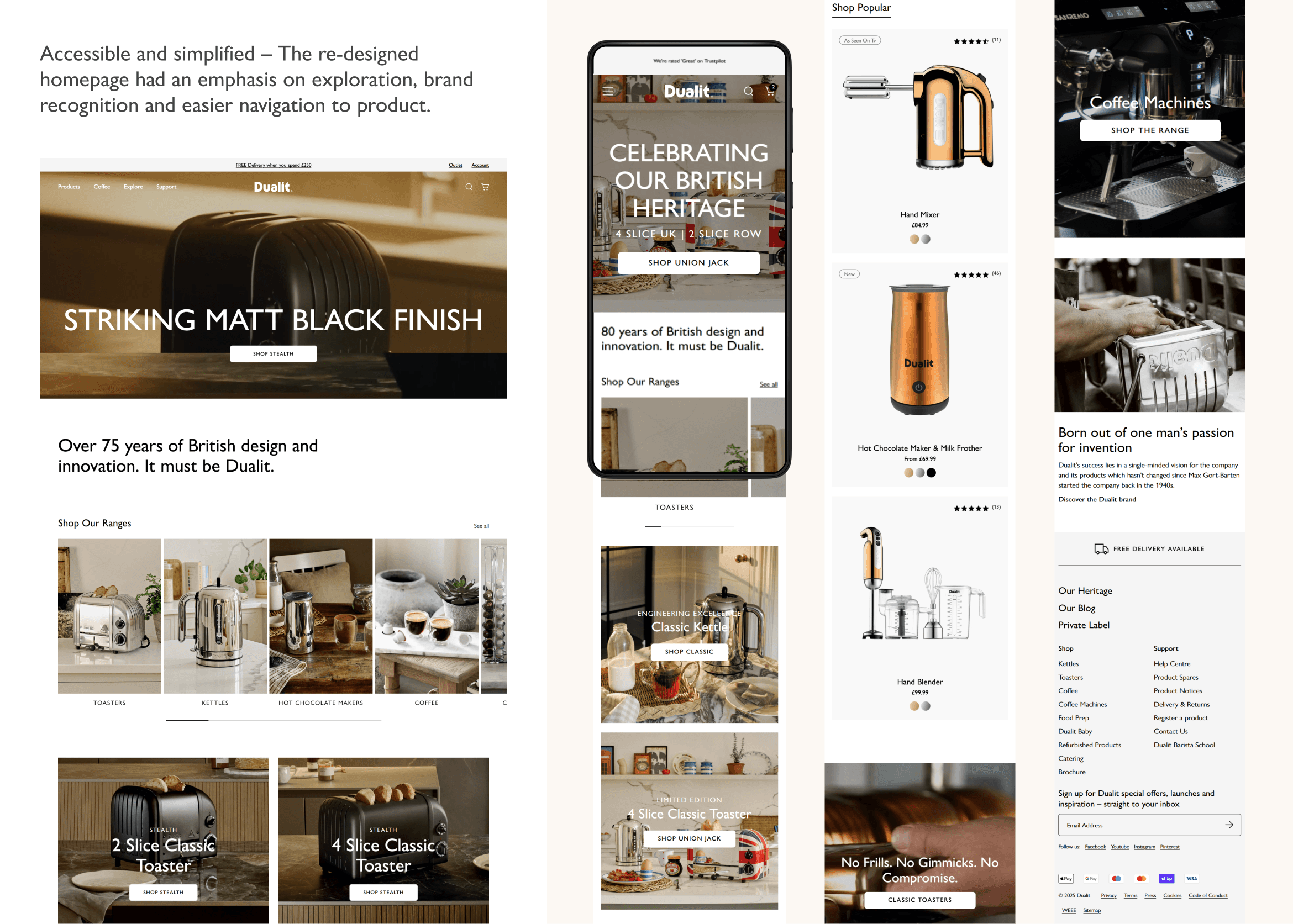
Homepage: Simplified hierarchy, improved typography, and modular blocks for flexibility and user exploration.
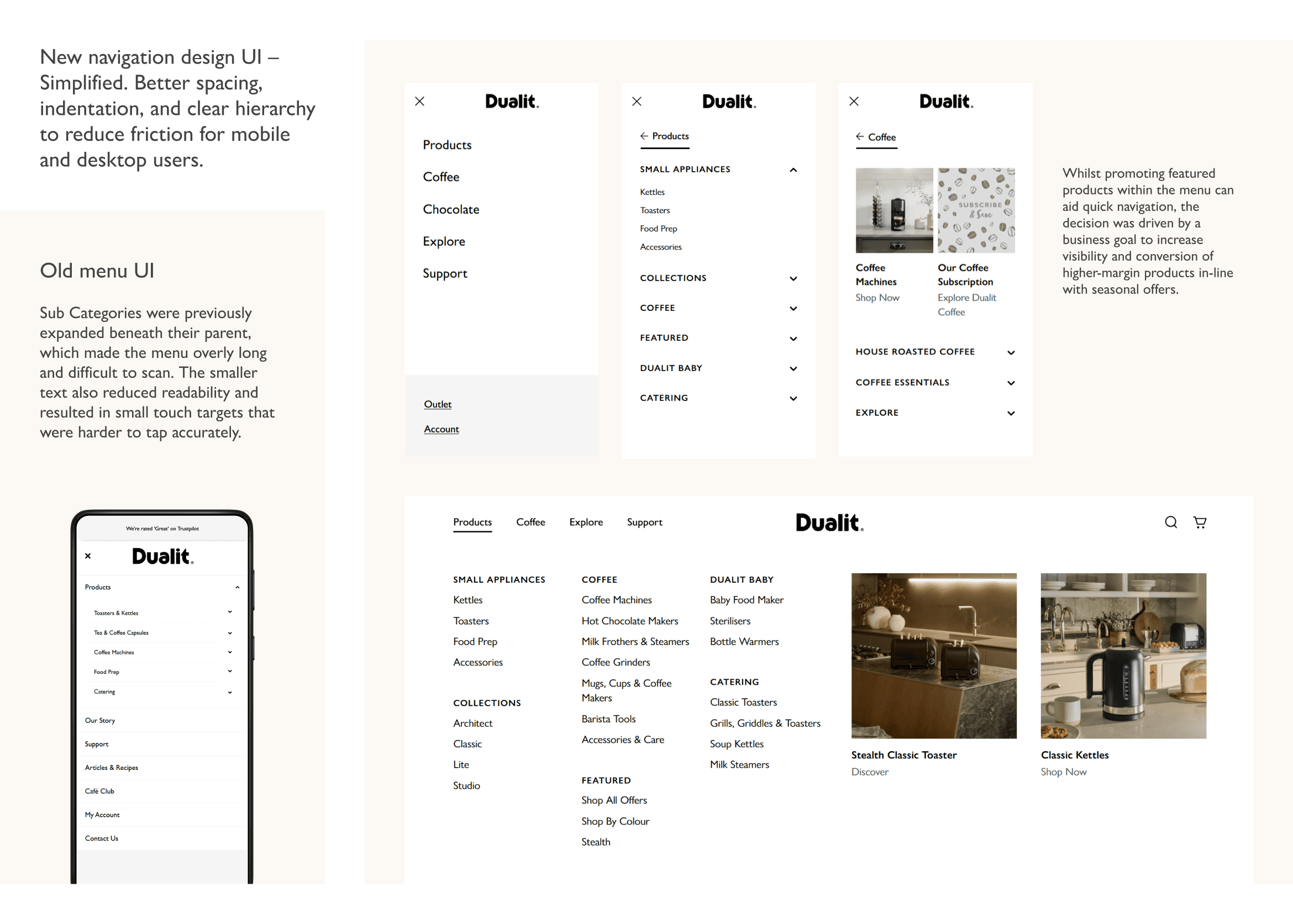
07
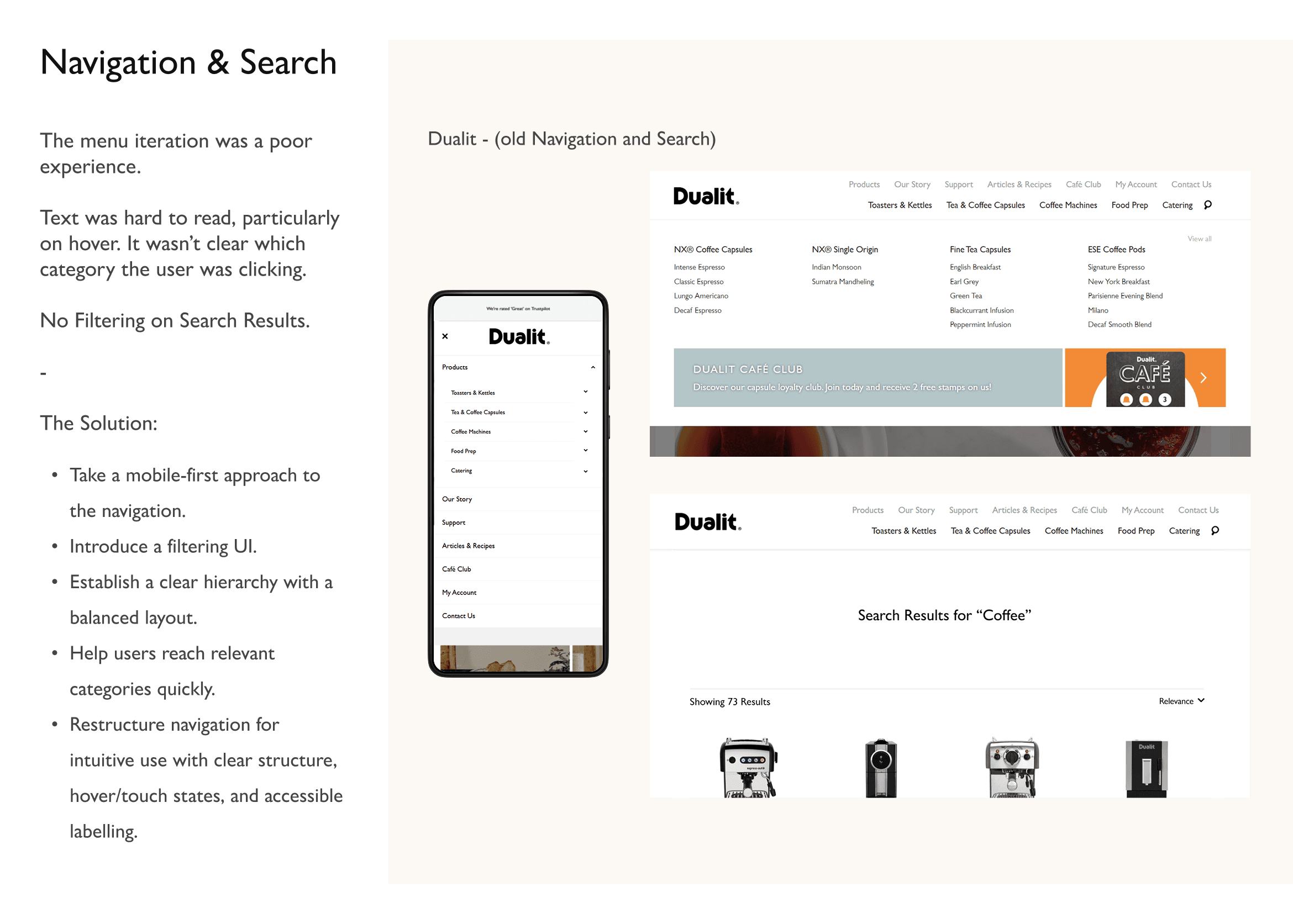
Navigation: Redesigned for intuitive use across devices, with better structure and accessible labelling.
08
Established a mobile-first, accessible navigation system with clear hierarchy, improved readability, and a balanced UI.
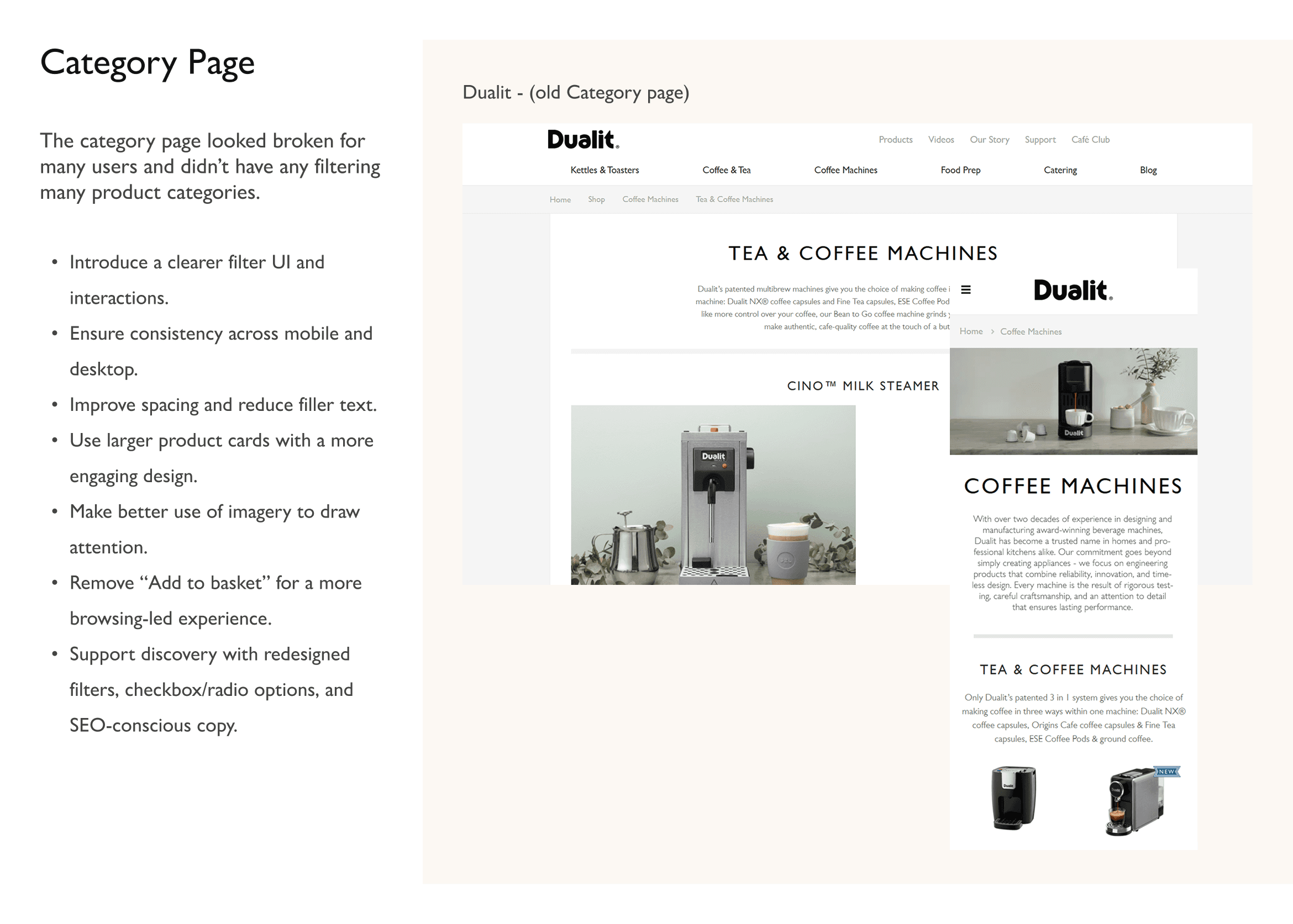
09
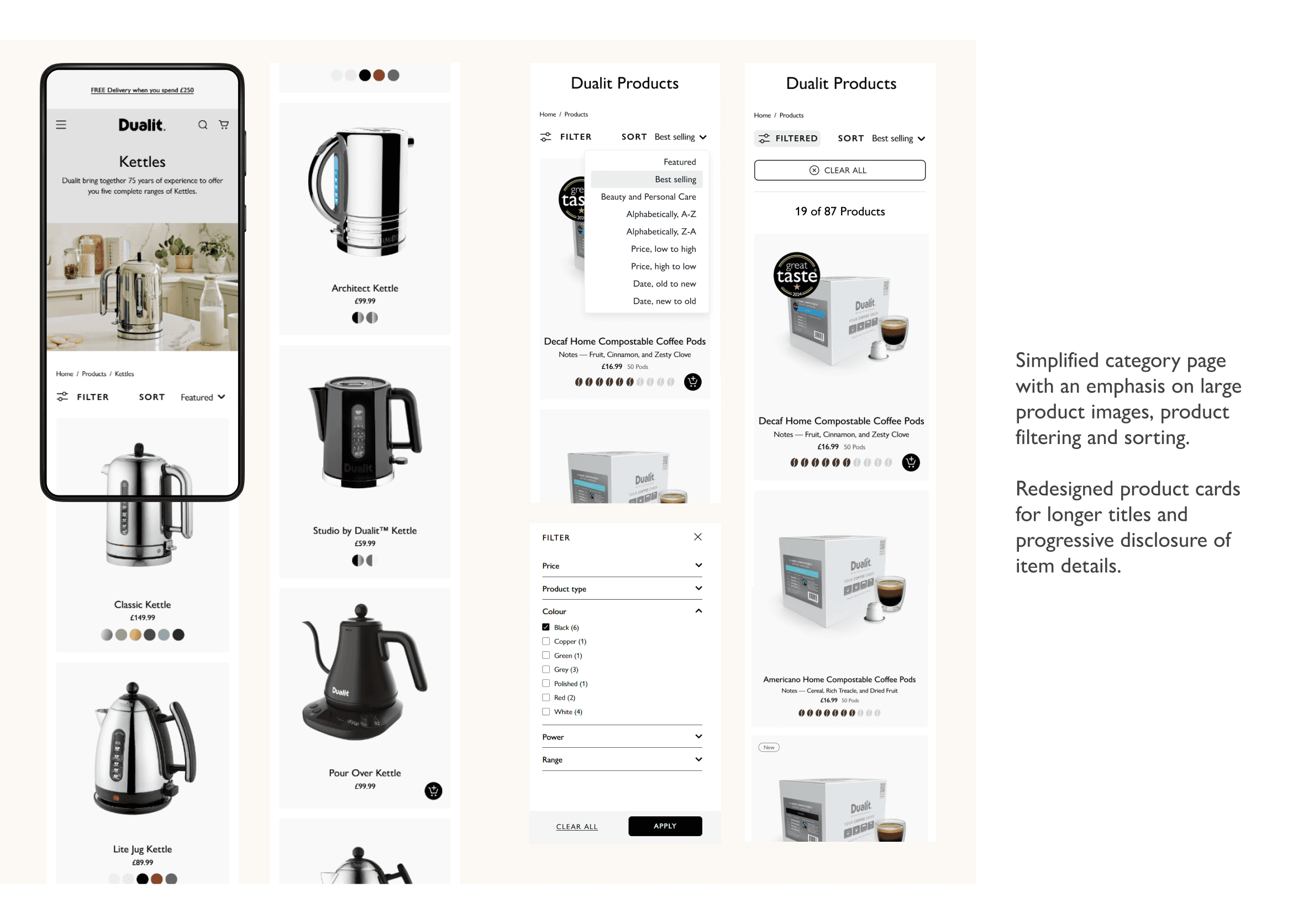
Category: Larger product cards, improved filters (checkboxes/radio), and SEO-conscious content layout.
10
A simplified category page better-emphasised filter/sort options, product images and key details.
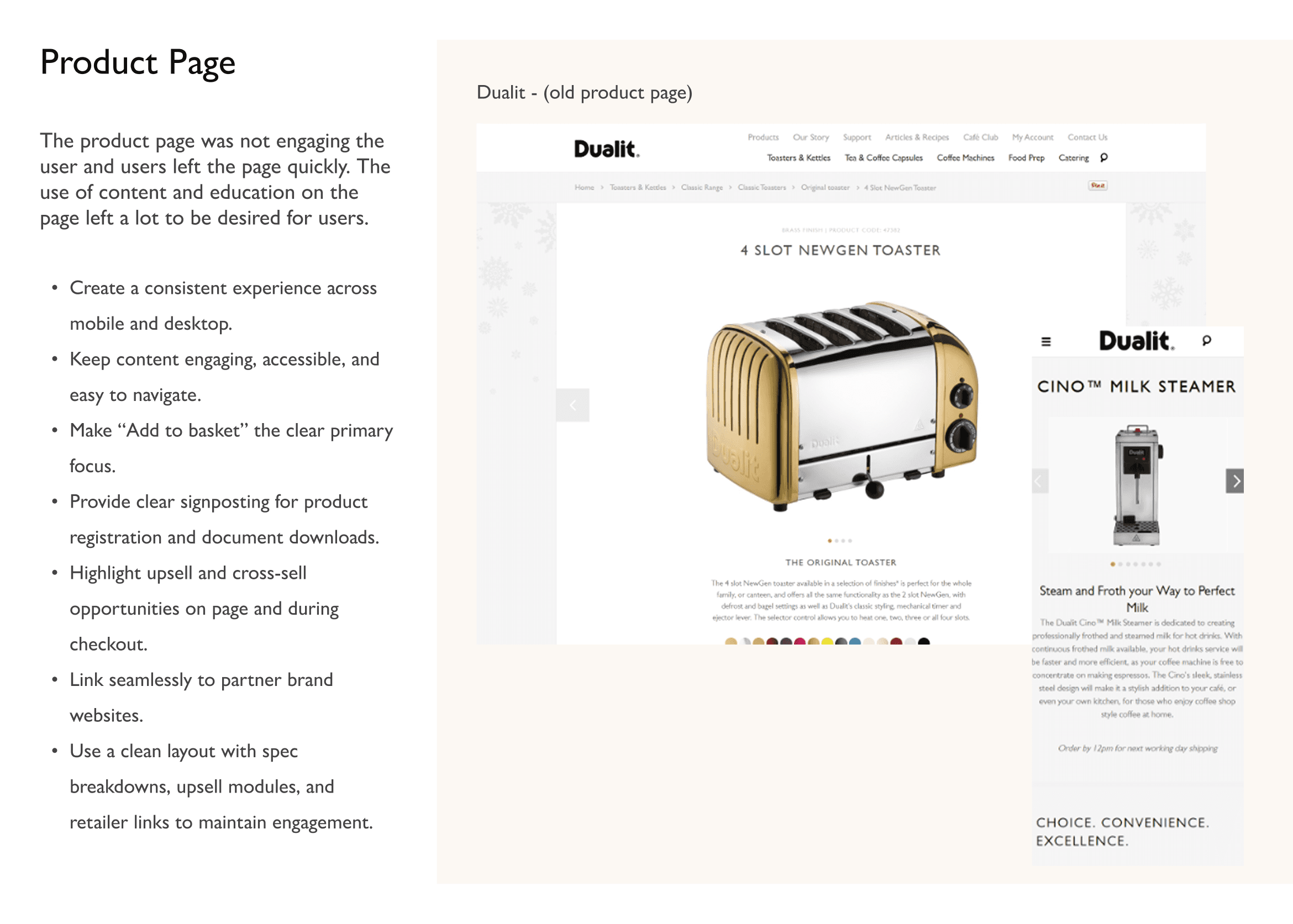
11
Product Page: Optimised to keep users engaged with improved content, upsell/cross-sell moments, and partner links.
12
Streamlined the checkout flow to reduce friction and support smoother conversions across devices
13
Refined messaging and layout to better communicate the brand story while supporting SEO.
14
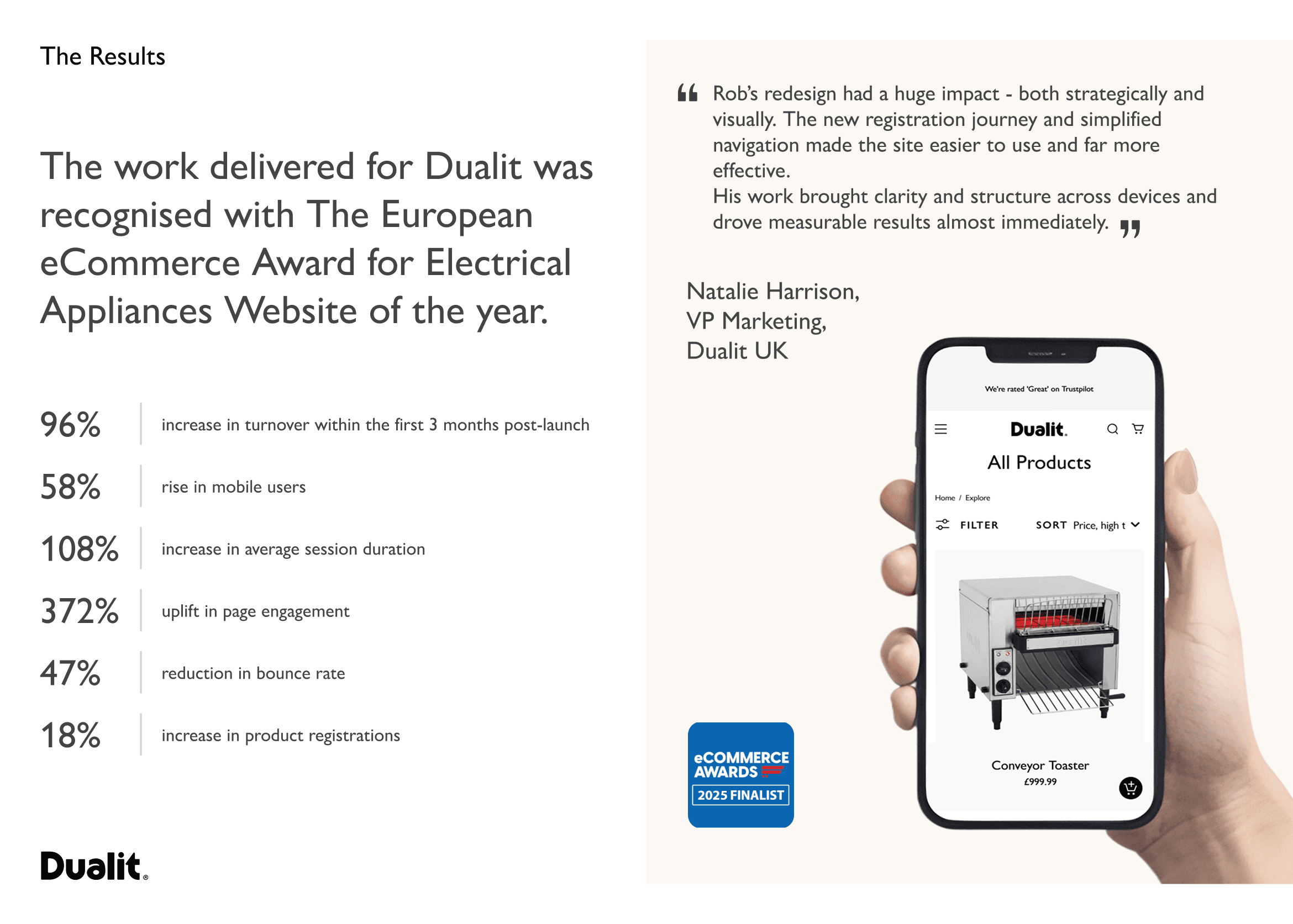
The results showed significant improvements in engagement and recognition that reflected the team’s collaborative effort and user-centred approach.
wrap up:
The impact was both behavioural and commercial:
96% increase in turnover within 3 months post-launch
47% reduction in bounce rate
108% increase in average session duration
372% uplift in page engagement
58% increase in mobile users
18% increase in product registrations
Qualitatively:
reduced cognitive load across the journey
clearer navigation and product understanding
increased user confidence in decision-making
"Dualit moved from a static catalogue to a structured, conversion-focused product experience"
If I continued this work, I’d focus on:
personalised product recommendations
adaptive journeys based on user intent
integrating behavioural data into decision flows
Moving from a structured experience to an intelligent, AI-driven system.