Ecolife
Designing a Trust-First E-commerce Experience for a New Sustainable Brand.

challenges
Starting from scratch: No existing platform, requiring decisions across structure, content, and user experience from the ground up
User expectations: Eco-conscious users needed transparency, clear product information, and an intuitive shopping experience
Building trust: As a new brand, credibility had to be established without existing reputation or reviews
Business goals: Create an experience that supports discovery, communicates value, and encourages conversion
solutions
Navigation & structure: Designed a clear category system with filtering to simplify product discovery
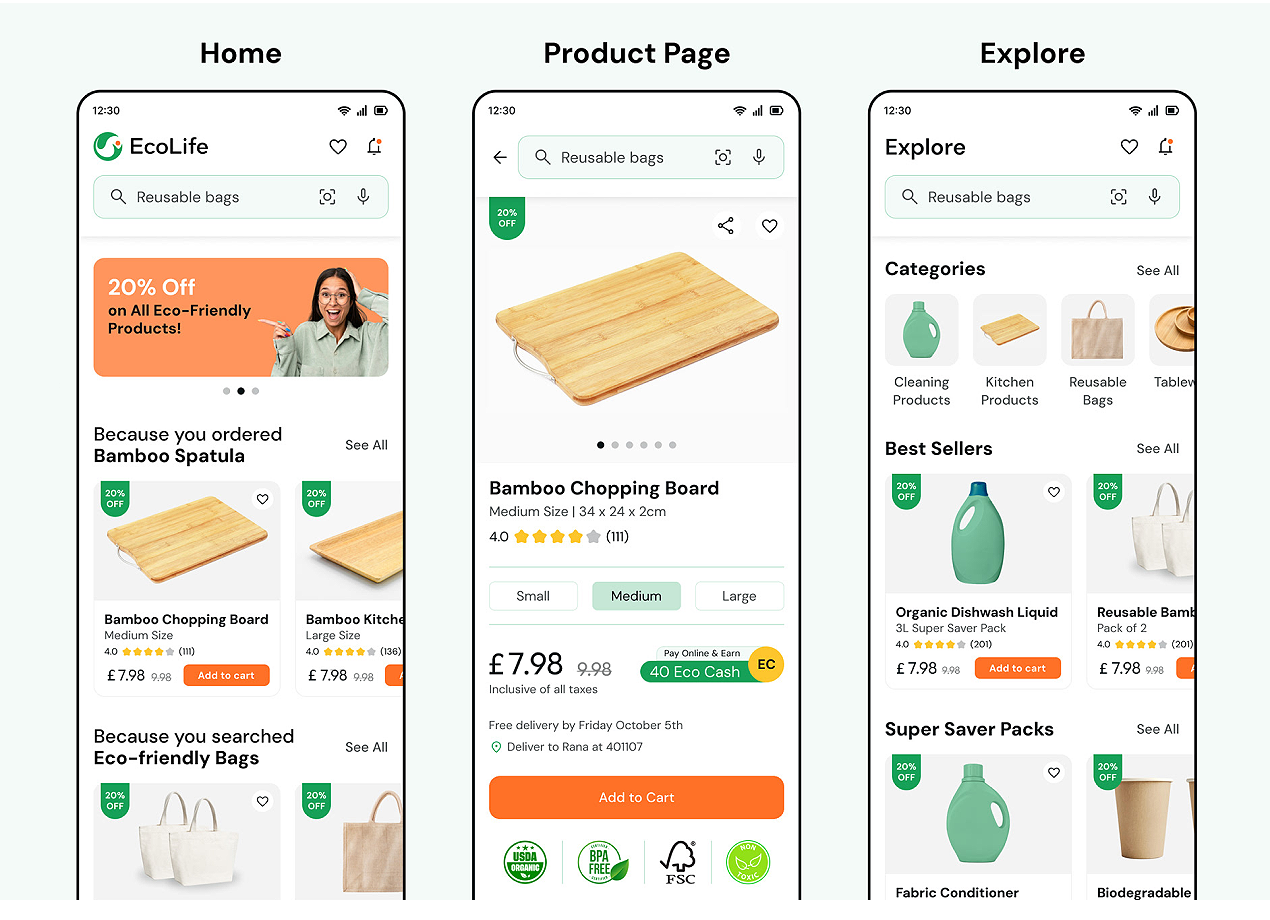
Product pages: Introduced structured sustainability information, certification indicators, and clearer CTAs
User journey: Defined a streamlined flow from landing to checkout, reducing unnecessary friction
Mobile-first design: Ensured usability and readability across devices
Sustainability hub: Created supporting content to educate users and reinforce brand positioning
Without an existing product or brand presence, the core challenge wasn’t just designing an e-commerce site.
It was defining how a new brand could:
communicate trust
present complex product information clearly
and support confident purchase decisions
The focus shifted from building pages to designing a clear, trustworthy buying experience from first interaction to checkout.
Without an existing product or brand presence, the core challenge wasn’t just designing an e-commerce site.
It was defining how a new brand could:
communicate trust
present complex product information clearly
and support confident purchase decisions
The focus shifted from building pages to designing a clear, trustworthy buying experience from first interaction to checkout.
My Role
I led the UX and product design from concept to prototype:
defined information architecture and core user flows
designed key journeys across discovery, product, and checkout
established consistent UI patterns and visual structure
validated decisions through usability testing
Key Decisions & Approach:
1. Designing for Trust from First Interaction
With no existing brand credibility, trust needed to be built into the experience.
The focus was on:
surfacing sustainability information clearly on product pages
introducing certification indicators to support credibility
structuring content to prioritise transparency over marketing
This helped users quickly understand what made products credible and aligned with their values.
2. Structuring Product Information for Clarity
Eco-friendly products often require more explanation than standard retail.
Product content was:
organised into clear, scannable sections
balanced between detail and readability
structured so key information (materials, sourcing, certifications) was easy to access
This reduced cognitive load while still supporting informed decisions.
3. Simplifying Discovery and Navigation
From the outset, the structure was designed to scale with product growth.
This included:
a clear category hierarchy
filtering to support different browsing behaviours
consistent navigation patterns across the site
The result was a more predictable and easier-to-navigate experience.
4. Supporting Engagement Beyond Transactions
To reinforce brand positioning, a Sustainability Hub was introduced:
provided educational content around eco-friendly living
supported SEO and long-term engagement
positioned the brand as more than just a retailer
Validation & Iteration
Usability testing focused on key journeys such as:
product discovery
evaluating product information
completing checkout
Results showed:
93% task success rate across core flows
users spent ~30% longer engaging with product pages, indicating deeper interaction with content
Feedback highlighted that:
certification indicators increased perceived trust
transparency of information improved confidence in purchasing decisions
year
2024
timeframe
23 days
tools
Miro, Figma, Framer
category
UI/UX
01
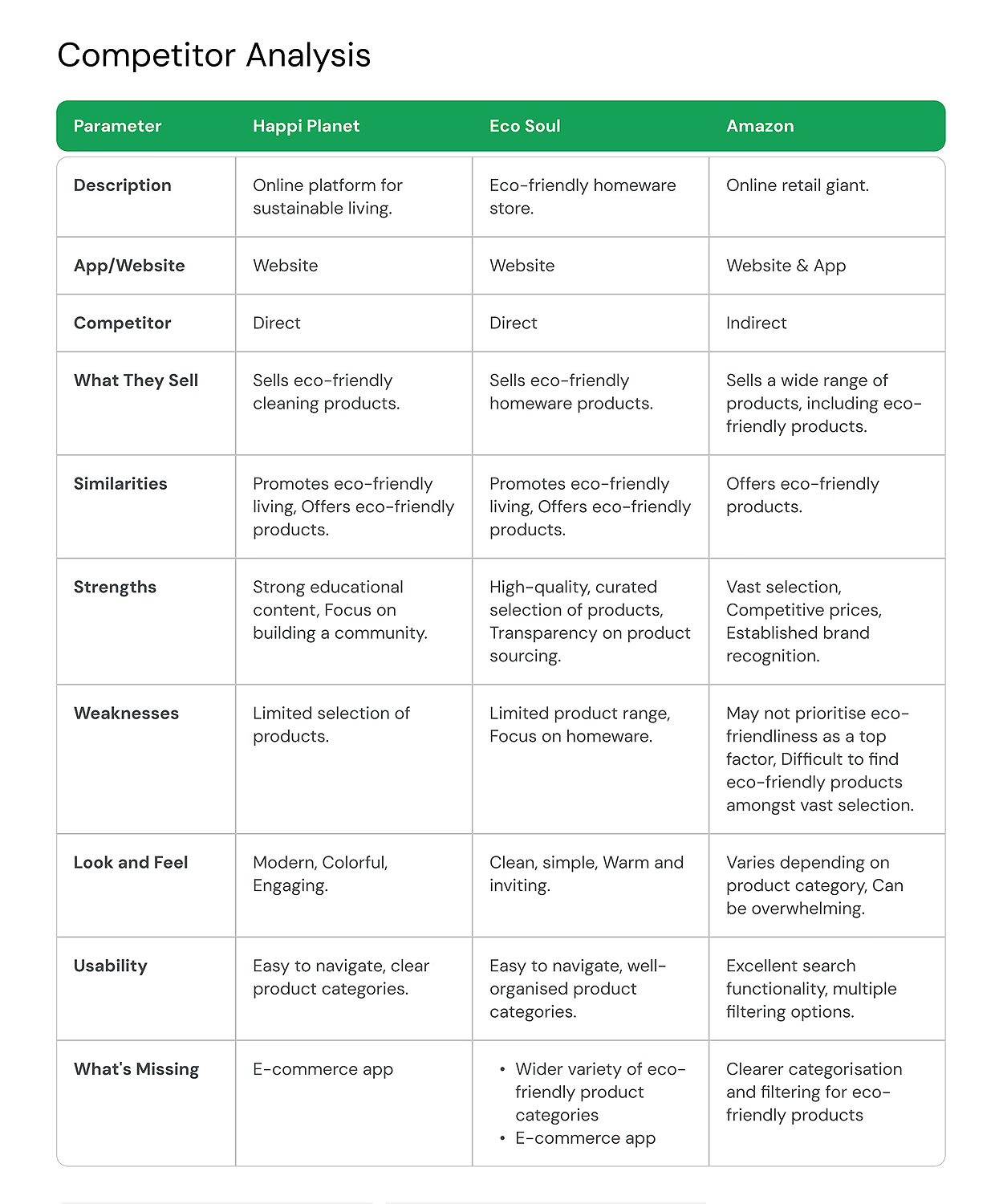
A standard benchmarking excercise was undertaken to compare the current competitor offerings and assess the market-fit.
02
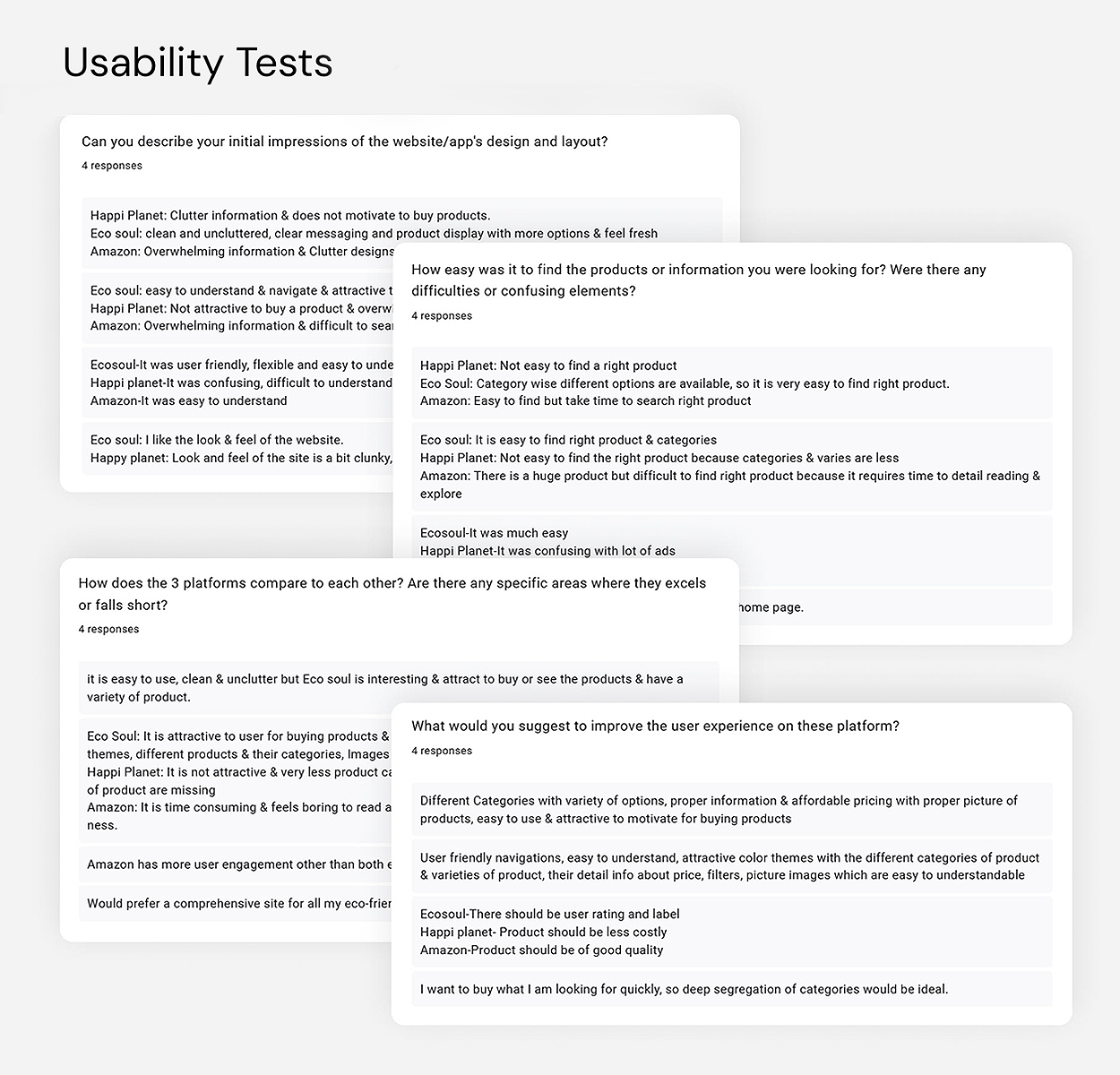
Conducted usability tests for analysing competitor apps/websites so as to understand how users are feeling by using their products and platform.
03

Before surveying potential customers, I did some qualitative research to get an idea of the success factors that needed to be prioritised.
04
Analysing the user responses and listing the user wants helped inform the sitemap and visualisation of page content.

05
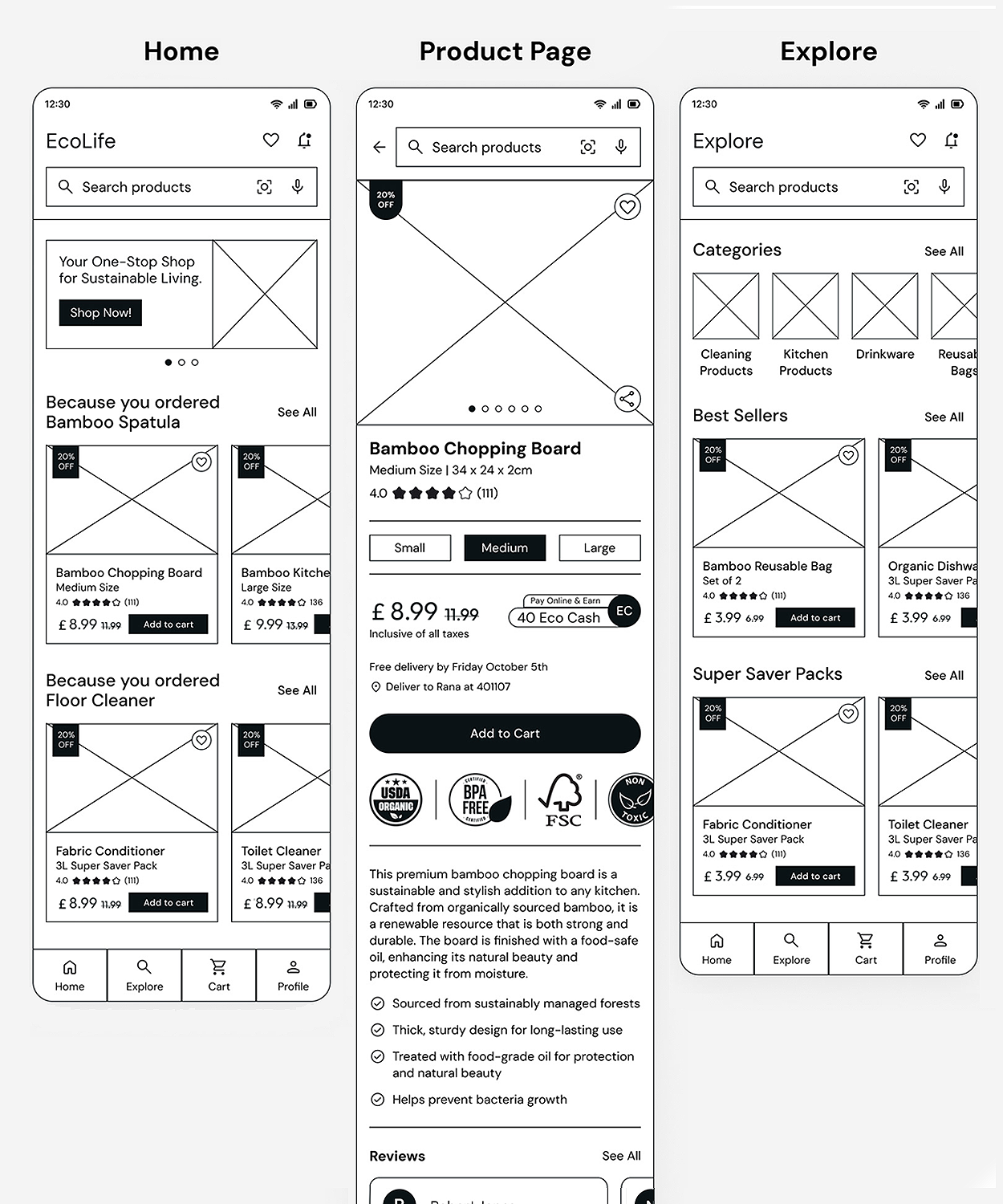
I created the low fidelity wireframes after taking into account the core user needs and establishing 3-4 personas.
06
After continued research and benchmarking, I finalised the brand UI to reflect eco-conscious values through clean, modern, and nature-inspired aesthetics.
wrap up:
Quantitative Results:
Initial testing indicated high success rates (93%) for completing key tasks, such as finding products and navigating the checkout process.
Participants spent an average of 30% longer engaging with product pages compared to earlier prototypes.
Qualitative Outcomes:
Positive feedback included comments like, “The little touches such as the certification icons feel trustworthy – the prototypes are professional and seamless.”
Testers appreciated the transparency of sustainability details and the additional resources in the Sustainability Hub.
Lessons Learned:
Establishing trust early through clear communication and transparency is crucial for new eco-focused brands.
Future usability testing could explore the placement of these messages, as well as further refinements to the filtering system and ease of check-out.
My handover / next steps:
Exploring personalised product recommendations and user accounts for improved engagement.
A/B testing homepage layouts to optimise conversions further.
Continued focus on gathering post-launch feedback for ongoing improvements.